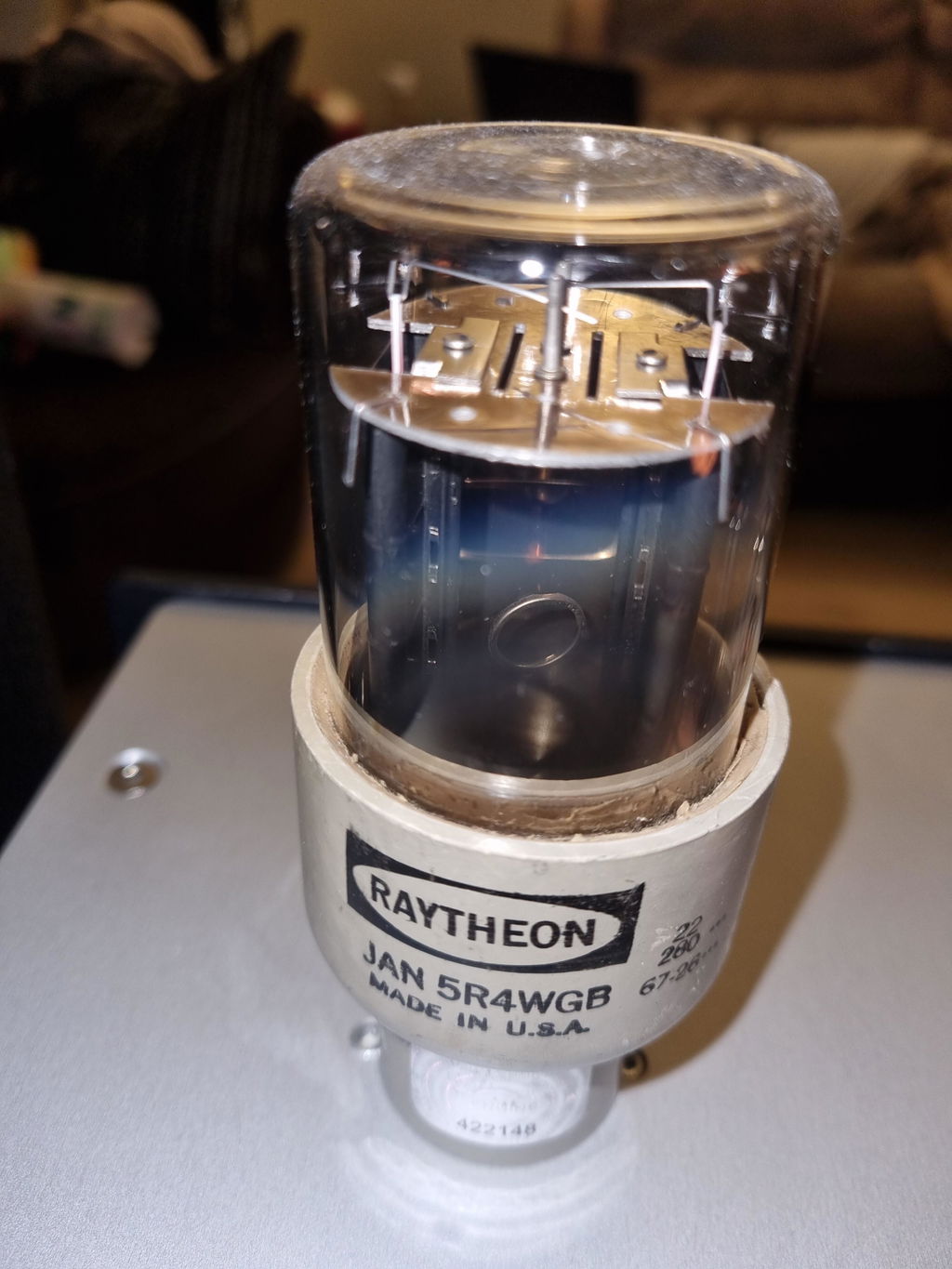
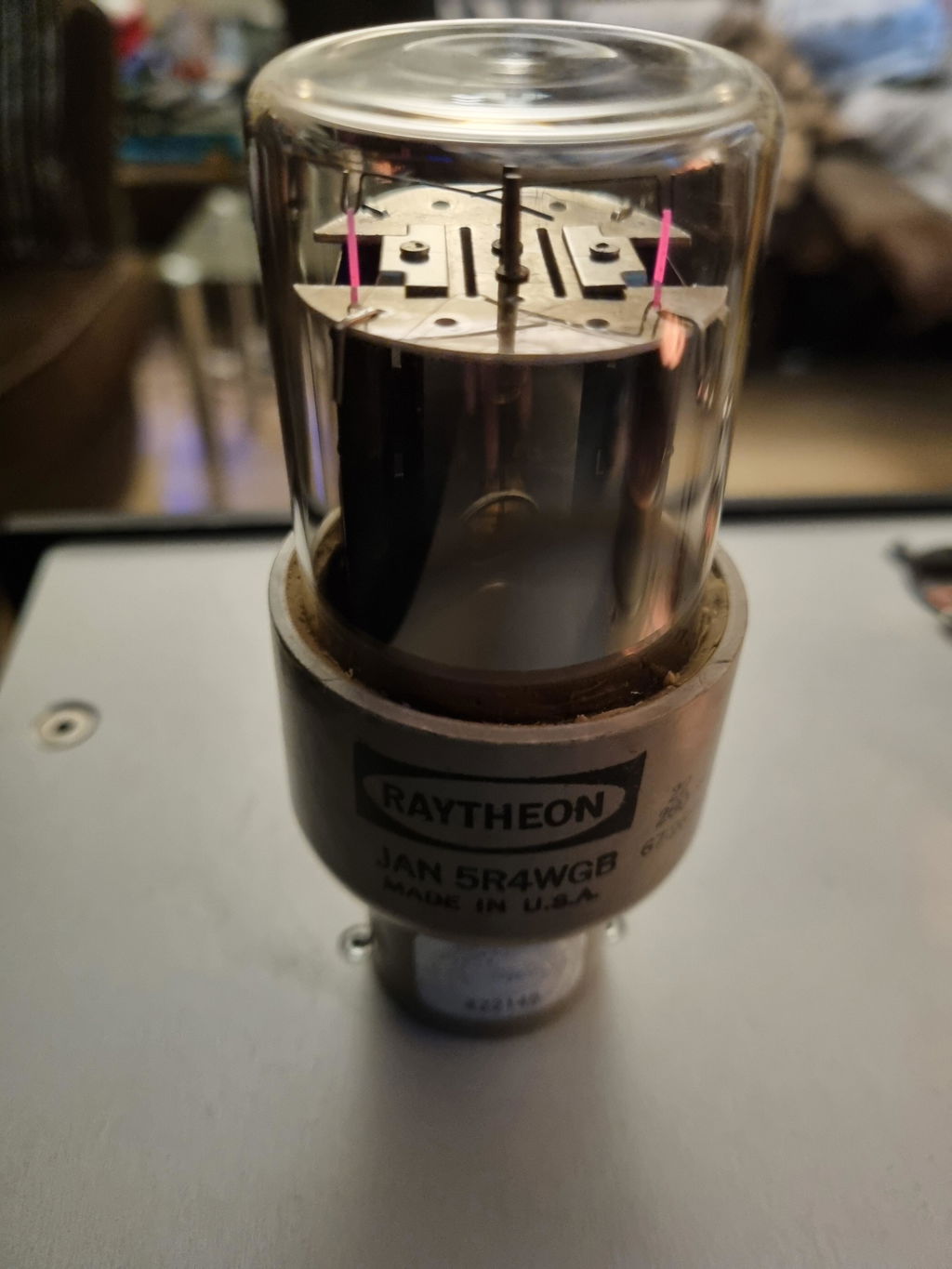
JAN 5R4WGB RAYTHEON Matched Pair Black Plates Double Halo Getter Hanging Filaments Rectifier Tubes Made in USA '67
Description:
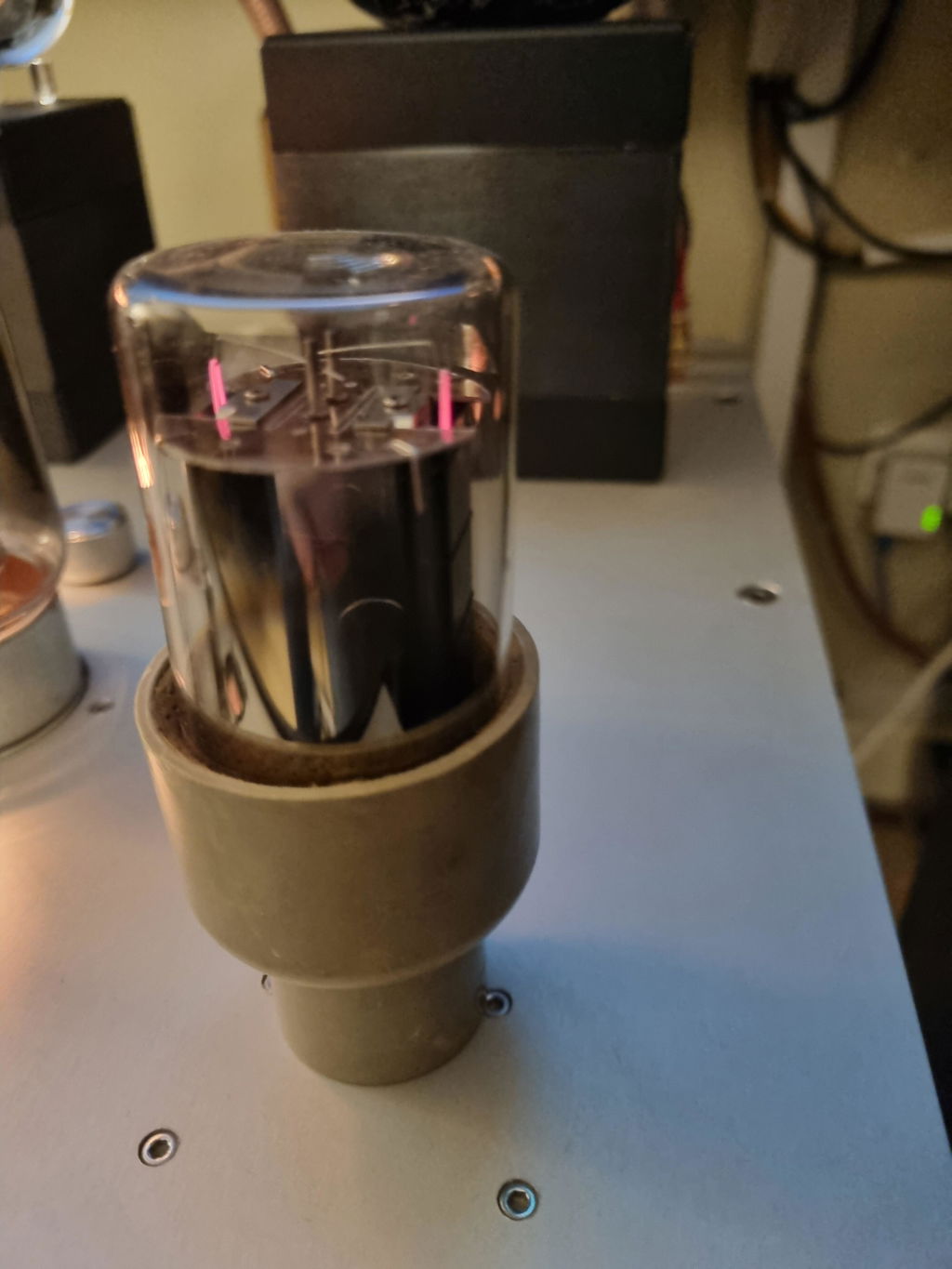
The 5R4WGB RAYTHEON , in this 1967 JAN (Joint Army-Navy) version, features a ruggedized military construction, with solid black plates , dual halo getters , suspended filaments , and thick “potato masher” style glass. This is one of the most rugged and reliable rectifiers of the era, designed to withstand extreme operating conditions without compromising electrical stability.
This matched pair guarantees ideal symmetry between the channels, and is suitable for dual mono power supplies, medium power single-ended amplifiers or restorations of military and broadcast electronics, where reliability, silence and solidity of tone over time are required.
Bass : solid and authoritative. The low range is deep and well anchored , with a behavior that favors controlled impact over softness. Ideal for systems that require stability under load and a decisive response.
Mids : dry and focused. The mid frequencies are clean, linear and free from colorations , with a more “technical” than romantic setting. The voices are precise , and the acoustic instruments emerge with clarity and coherence .
Highs : neutral and transparent. The upper part of the spectrum does not introduce any attenuations or exaltations: the detail is well present , but never excessive. The brilliance is measured , with an analytical but not tiring rendering.
Dynamics : Reactive and stable. The dynamic behavior is fast but always under control , without hysteresis or perceptible delays. The valve handles sudden variations well, returning a clean and coherent signal, even with variable loads.
Soundstage : wide and rational. The soundstage is deep and well distributed , with excellent separation between channels and a spatial rendering that is more engineered than euphonic . Ideal for those seeking precision and transparency in the construction of the soundstage .
🎧 Use in Headphone Amplifiers and Driver Stages Hi-Fi
Thanks to its exceptional stability and extremely low noise floor , this pair is ideal for tube preamplifiers, dual mono DACs and reference headphone amplifiers , especially in systems where timbral accuracy and resolution are fundamental criteria. It pairs perfectly with headphones such as the Hifiman Susvara , Focal Utopia or Sennheiser HD800S , enhancing their neutral and transparent character.
🎸 Use in Guitar and Bass Amplifiers
The 5R4WGB is often used in high-grade American amplifiers or boutique military-spec models , where it offers tight rectification, crisp attack, and stable response under stress . Ideal for articulate clean sounds, jazz, country, and high-fidelity studio recording. Less suitable for those looking for tube-like compression and pronounced sag.
🎯 Note for audiophiles and technicians
A technically flawless rectifier, designed to last for decades. The JAN RAYTHEON brand, the presence of suspended filaments and the symmetrical internal construction make it an excellent choice for those who favor electrical rigor, symmetry between channels and reliability over the long term . The matched pair version represents an added value in dual mono or balanced contexts.
Test Results:
Valve tested on Funke W19 Tube Tester:
- Test Conditions: Va = 100V ; Vf = 5.0V
- Good from: Ia = 61 mA
- Average 100%: Ia = 95 mA
- Test Result: VERY STRONG
Valve 1:
- Section 1: Ia = 110 mA
- Section 2: Ia = 105 mA
Valve 2:
- Section 1: Ia = 110 mA
- Section 2: Ia = 100 mA
Additional Tests Performed:
- Microphonics: Standard. Tested and compliant for use in hi-fi and guitar amplifiers.
- Output Quality: Excellent – Very strong and stable output, no fluctuations.
- Short circuits and GAS: Absent.
Conditions:
- Condition: Vintage Tubes - Tested and in perfect working order. Supplied in our custom box for optimum protection.
- Functionality: Fully functional.
- Aesthetic Condition: Very Good – Clearly legible writing with slight signs of aging. See photos for details.
- Manufacturing Code: 67-33 and 67-26 - Built in the 33rd and 26th week of 1967 respectively.
Find out why our valves are different →


 Open here