12AX7 / ECC83 Mullard Blackburn – Selected Pair – Same 3-Character Code I61 B1C – Short Gray Plates – Halo Getter – Made in Great Britain
AMPLITREX Tested – Low Noise & Microphonics – Early Blackburn Production – Selected Vintage Pair
Description
Selected pair of 12AX7 / ECC83 Mullard Blackburn, Made in Great Britain production, belonging to the early British Mullard Blackburn productions and chosen for constructive consistency, same production origin, and overall operational quality.
Both tubes bear the same etched code I61 B1C, an element of great interest for aesthetic, constructive, and historical consistency. The code B1C refers to a very early Blackburn production from 1951, a period now particularly sought after by enthusiasts of vintage British ECC83s.
The construction features Short Gray Plates and a top Halo Getter, with architecture typical of the British Mullard school, appreciated for musicality, tonal balance, and naturalness of sound presentation.
The pair is offered as a Selected Vintage Pair, not as a precision matched pair: the two tubes share the same factory, same code, and homogeneous internal structure, albeit with not perfectly identical electrical values, which is consistent with authentic used vintage Mullard Blackburns over seventy years old.
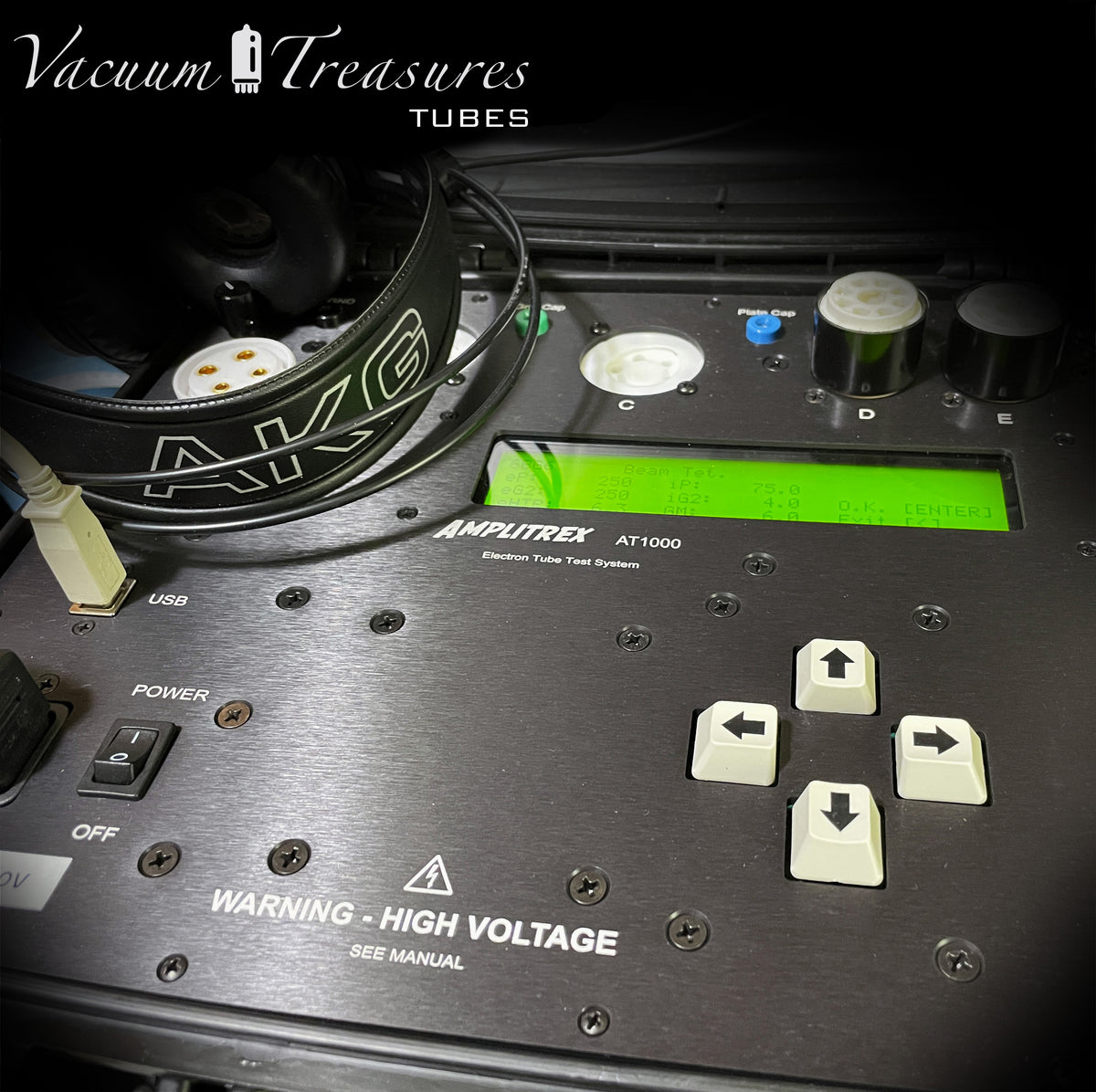
The tubes have been tested using an Amplitrex AT-1000 Tube Tester with particular attention to quietness, microphonics, and operational stability. Both showed regular behavior, Low Noise & Microphonics, absence of GAS, and absence of short circuits.
From an aesthetic point of view, they are in good condition and consistent with their age, with signs of time and screen print wear, while still maintaining an authentic and very charming appearance. See photos for details.
Sonically, they offer the typical character of early Mullard Blackburns: warm yet balanced reproduction, rich and material mids, sweet and well-integrated highs, natural and controlled bass. The presentation is fluid, organic, and very musical, ideal for those seeking the classic British Mullard tone.
Suitable for hi-fi preamplifiers, line stages, compatible phono stages, driver stages, integrated amplifiers, instrument amplifiers, and circuits compatible with 12AX7 / ECC83. The Low Noise & Microphonics selection also makes them interesting for sensitive positions, including compatible phono and V1 applications.
A Mullard Blackburn I61 B1C pair with strong historical and sonic appeal, genuinely selected by Vacuum Tubes Treasures for those seeking authentic early production British ECC83s, consistent, quiet, and musically refined.
Test Results:
Tube tested on AMPLITREX AT-1000 Tube Tester:
-
Test Conditions: Va = 250V ; Vg = -2V
-
Average 100%: Gm = 1600 ; Ia = 1.2 mA
-
Test Result:
Tube #1: STRONG
-
Section 1: Gm = 1200 ; Ia = 0.8 mA
-
Section 2: Gm = 1400 ; Ia = 0.9 mA
Tube #2: VERY STRONG
-
Section 1: Gm = 1300 ; Ia = 0.9 mA
-
Section 2: Gm = 1700 ; Ia = 1.3 mA
Additional Tests Performed:
-
Microphonics: Low. Tested and suitable for hi-fi use, including phono stages and guitar amplifiers. Also suitable for V1.
-
Noise: Low and well controlled. Quiet operation in hi-fi and musical amplifiers in intended positions.
-
Balance: The sections show not perfectly coincident values, an aspect consistent with an authentic selected vintage pair. The pair remains fully interesting for hi-fi and musical use in compatible circuits.
- Emission Quality: Strong – Strong and regular emission, suitable for any application.
- Short Circuits and GAS: Absent.
Condition:
-
Condition: Vintage Tubes - Tested and fully functional. Supplied in our custom box for optimal protection.
-
Functionality: Perfectly operational.
-
Aesthetic Condition: Good and consistent with age. Signs of time, slight screen print wear, and normal vintage patina are present. See photos for details.
Manufacturing Code:
- I61 B1C → I6x indicates an ECC83 with the sequential progression of x, where the increment of x indicates production changes - B1C B → Mullard, Blackburn - 1 (out of three digits) → 1951 - C → March
Discover why our tubes are different →


 Open here