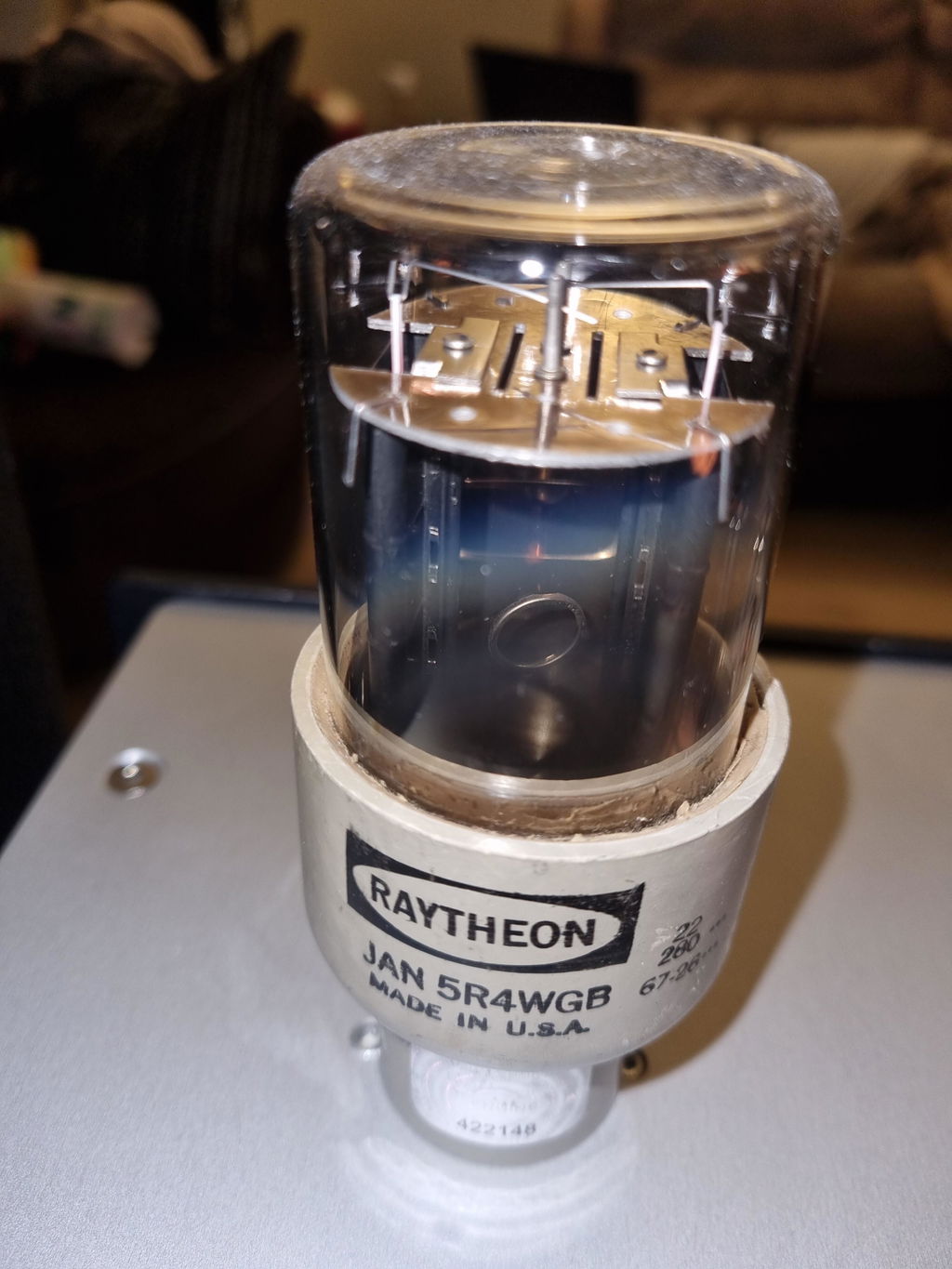
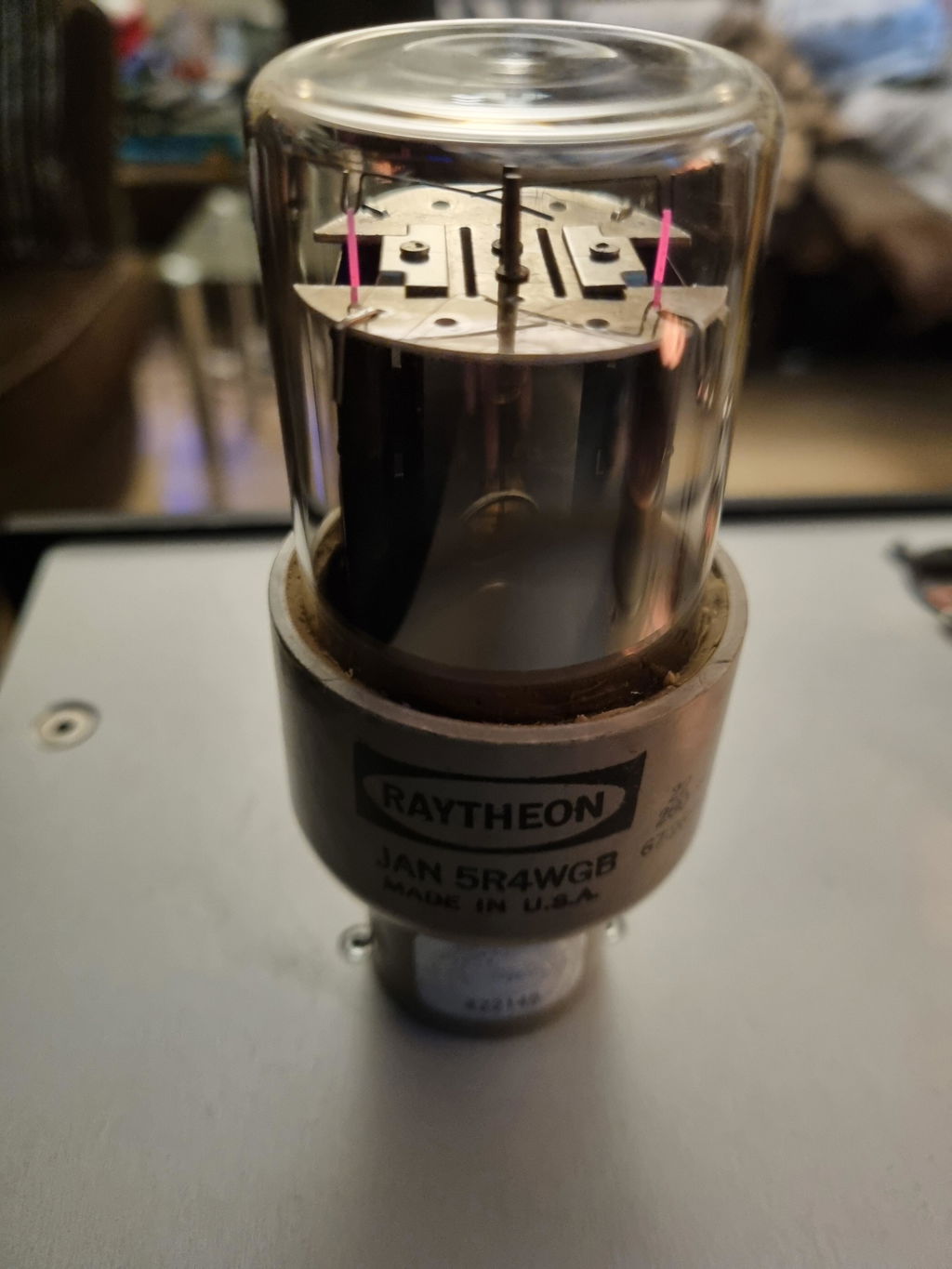
Complete guide to the 6550 JJ valve
Share
Technical specifications, compatibility, bias adjustment, listening impressions, and Signature selection
Introduction
In a landscape where European production of thermionic valves has progressively declined, JJ Electronic represents one of the most important companies ensuring the continuity of this technology. Founded in 1993 by Jan Jurco and based in Čadca, Slovakia, the company produces valves for high fidelity, musical instrument amplification, and professional audio applications.
Its production keeps alive an electronic tradition deeply rooted in Central Europe, developing new-generation valves intended for both contemporary amplifiers and numerous historic projects.
Among the best-known power output tubes, the 6550 holds a position of particular importance. Introduced by the American Tung-Sol in 1954, it quickly established itself in high-power amplifiers, joining the British KT88 in the following years. Both have become important references in the history of tube amplification.
The JJ 6550 continues this tradition with contemporary European production, offering an interesting combination of drive capability, control, and musicality.
But a good power tube is not judged solely by its brand or sonic characteristics. Its performance also depends on the amplifier's electrical conditions, proper biasing, and the quality of the selection of the tubes used.
In this guide, we will explore the technical specifications of the JJ 6550, its most common applications, the differences compared to the KT88, and the aspects to consider to achieve stable and satisfactory operation. We will also share our listening impressions and illustrate the selection process of the JJ 6550 Signature from Vacuum Tubes Treasures.
Technical specifications of the JJ 6550
The JJ 6550 is a beam power tube (beam power tube), with an indirectly heated cathode and an octal base. It is intended primarily for audio amplification and can be used in push-pull or single-ended configurations, provided that the circuit meets the electrical characteristics specified by the manufacturer.
According to the official JJ Electronic datasheet, the main specifications are:
| Parameter | Value |
|---|---|
| Filament voltage (Uf) | 6.3 V |
| Filament current (If) | 1.6 A |
| Maximum anode voltage (Va) | 600 V |
| Maximum screen grid voltage (Vg2) | 400 V |
| Maximum anode dissipation (Pa) | 35 W |
| Maximum screen grid dissipation (Pg2) | 6 W |
| Maximum cathode current (Ik) | 175 mA |
| Typical transconductance (S) | 11.8 mA/V |
| Typical internal resistance (Ri) | 16 kΩ |
| Base | Octal, 8 pin |
The reported transconductance and internal resistance values refer to the typical operating point indicated by JJ: Va = 250 V, Vg2 = 250 V, Vg1 = −14 V, and Ia = 140 mA.
It is important to distinguish the maximum allowable values from normal operating conditions. The maximum anode voltage of 600 V and the maximum anode dissipation of 35 W do not necessarily represent a recommended operating point: proper biasing depends on the amplifier design and the other electrical parameters involved.
The JJ 6550 features an internal structure designed for power applications, with a generously sized electrode system and a construction suitable for use in audio final stages.
As can happen with other newly produced tubes and various vintage specimens, we have observed slight variations in the height of the glass envelope. These dimensional differences, when within the specified tolerances, do not constitute a defect in themselves and do not indicate inferior electrical performance.
Ultralinear operation and screen grid voltage
A particularly interesting aspect of the JJ 6550 concerns its operation in an ultralinear configuration, adopted by numerous historic Hi-Fi amplifiers.
In an ultralinear circuit, the screen grid is connected to an intermediate tap of the output transformer's primary winding. In this way, its voltage partially follows the variations in anode voltage, helping to determine the behavior of the final stage.
This configuration combines some characteristics of pentode operation with others of the triode connection, offering an interesting compromise between available power, distortion, and output impedance.
JJ Electronic publishes specific characteristic curves for ultralinear operation with 40% output transformer taps. These curves include screen grid voltages exceeding 400 V, confirming that the tube's behavior has also been characterized in this configuration.
However, an important clarification is needed: the maximum screen grid voltage limit explicitly stated in the JJ datasheet remains 400 V. The characteristic curves do not, on their own, constitute a statement of a higher maximum limit.
It is interesting to remember that the documentation for the original 1960s Tung-Sol 6550s distinguished the screen grid voltage limit in pentode connection from that in triode or ultralinear connection. These historic specifications cannot, however, be automatically attributed to modern production tubes.
For this reason, when installing JJ 6550s in vintage ultralinear amplifiers, it is advisable to check the actual circuit voltages and consider the specifications of the particular production used.
Compatibility and typical applications of the JJ 6550
The 6550 has been used in numerous Hi-Fi and professional amplifiers, standing out for its ability to work in high-power final stages and for its dynamic response characteristics.
JJ production represents an interesting choice for amplifiers designed for this tube family, provided that the electrical and mechanical requirements of the circuit are met.
The mere presence of the 6550 designation in an amplifier's manual does not guarantee that all historic and contemporary productions have identical electrical limits.
Classic Hi-Fi amplifiers
Among the best-known applications are:
- Audio Research: several amplifiers from the American company use tubes from the 6550 family. The use of selected and matched specimens is particularly important in push-pull stages with multiple tubes per channel.
- Dynaco Mark III: one of the great classics of American tube amplification, designed to use a pair of 6550s or KT88s in an ultralinear configuration. Compatibility with JJ productions must be assessed by considering the actual voltages, especially on the screen grid.
- McIntosh: in some historic models and applications that involve the use of the 6550/KT88 family, the choice of tube requires attention to the circuit specifications, without automatically considering all productions equivalent.
- Conrad-Johnson, VTL, and other specialized manufacturers: numerous amplifiers use the 6550 family, often in push-pull configurations with multiple matched specimens.
In these devices, the quality of the selection can take on particular importance. Tubes with uniform electrical characteristics facilitate the correct balancing of the final stage and allow for a more consistent bias adjustment.
The case of the Dynaco Mark III
The Dynaco Mark III deserves particular attention, also due to our direct experience with this amplifier.
The original design uses two 6550 or KT88 final tubes in ultralinear push-pull, driven by a 6AN8, with a Dynaco output transformer.
The original manual specifies a total cathode current of 140 mA for the tube pair, corresponding approximately to 70 mA per tube. This configuration was developed during a period when the nominal characteristics of the original American productions differed in part from those of some contemporary tubes.
We personally use JJ 6550 tubes on a pair of original Dynaco Mark IIIs, matched with Dynaco A-25 speakers, with satisfactory listening results.
This experience constitutes positive feedback, although it does not represent a test of longevity over a high number of operating hours.
For restored or modified specimens, it is important to check the anode voltage, the screen grid voltage, and proper biasing, especially when the power transformers have been replaced or the filtering circuit modified.
A more conservative anode bias can reduce idle dissipation, but it does not replace compliance with the other electrical limits specified for the tube.
Amplifiers for musical instruments
The 6550 is also particularly well-known in the world of electric bass amplification, where it is appreciated for its power, wide dynamic headroom, and low-frequency response.
An emblematic example is the Ampeg SVT, in versions designed for six 6550 final tubes.
In amplifiers of this type, the quality and uniformity of the tubes are important because the final stage must operate with multiple specimens under often demanding conditions.
The 6550s can also be found in guitar and bass amplifiers from different eras, or in devices modified to accommodate this type.
Even in the musical field, compatibility with the JJ 6550 must be verified against the actual characteristics of the amplifier, without relying exclusively on the tube designation.
Compatibility with KT88 – Comparison table
The 6550 and KT88 tubes share numerous historic applications, but they should not be considered electrically identical in every operating condition.
The following comparison specifically concerns contemporary JJ Electronic 6550 and JJ Electronic KT88 productions.
| Characteristic | 6550 JJ | KT88 JJ |
|---|---|---|
| Maximum anode voltage | 600 V | 800 V |
| Maximum screen grid voltage | 400 V | 600 V |
| Maximum anode dissipation | 35 W | 42 W |
| Maximum screen grid dissipation | 6 W | 8 W |
| Filament voltage | 6.3 V | 6.3 V |
| Filament current | 1.6 A | 1.6 A |
| Base | Octal | Octal |
From an electrical standpoint, the KT88 JJ has higher nominal voltage and dissipation margins. This does not mean, however, that it automatically represents the best choice for every amplifier.
The behavior depends on the circuit, the output transformer, the biasing, and the actual operating point.
Sonically, the 6550 is often described as a tube with a solid, controlled character and a rich presence in the lower midrange. The KT88 is frequently associated with a broader and more open presentation.
These differences should be considered guideline listening impressions, not absolute and universal properties of the two types.
A correctly selected 6550 used in a suitable circuit can offer results of great interest, without the KT88 automatically being considered an improvement.
Bias adjustment: a fundamental aspect
The correct adjustment of the quiescent current is one of the most important elements for the proper operation of a final tube.
In amplifiers with adjustable fixed biasing (fixed bias), the negative voltage applied to the control grid determines, together with the other electrical conditions, the current flowing through the tube in the absence of a signal.
An excessive quiescent current can increase anode dissipation, promote overheating, and reduce the useful life of the tube.
Conversely, a current that is too low can increase crossover distortion in certain class AB push-pull circuits and alter the amplifier's behavior at low signal levels.
However, there is no single ideal quiescent current value for all JJ 6550 applications.
How to assess anode dissipation
An initial check can be performed by considering the power dissipated by the anode at idle:
Pa = Va-k × Ia
Where:
- Pa is the anode dissipation in watts;
- Va-k is the voltage between anode and cathode;
- Ia is the actual anode current in amperes.
For example, assuming an anode-cathode voltage of 450 V and an anode current of 50 mA, we get:
450 V × 0.050 A = 22.5 W
The resulting dissipation corresponds to approximately 64% of the maximum anode limit of 35 W stated by JJ.
This is a simple calculation example, not a universal biasing recommendation.
It is also important to remember that the cathode current includes both the anode current and the screen grid current. If the measurement is taken on the cathode, the actual anode current will therefore be slightly lower than the total detected value.
Anode dissipation is not the only parameter to respect: the screen grid voltage and dissipation must also be considered, in addition to the specific characteristics of the circuit.
Bias adjustment: a guideline, not a rule
To achieve proper operation, we recommend adhering to the amplifier manufacturer's instructions, considering any modifications only after verifying the actual electrical conditions.
A more conservative bias can be appropriate in several final stages, especially when the goal is to contain idle dissipation. However, it should not be interpreted as a solution capable of compensating for any other out-of-specification parameter.
In push-pull circuits, an accurate selection of tubes also allows for more uniform characteristics among the specimens, facilitating the adjustment of the final stage.
Bias adjustment must be performed with suitable tools and by competent personnel. Tube amplifiers contain high and potentially lethal voltages, which can remain on the capacitors even after powering off.
Break-in and stabilization of the JJ 6550
Newly produced thermionic tubes may exhibit initial variations in electrical parameters during the first hours of operation.
For this reason, initial stabilization represents an interesting aspect, especially when a particularly accurate instrumental selection is desired.
It is appropriate to distinguish technical burn-in, carried out before the final selection, from the listening break-in commonly described by enthusiasts.
Burn-in allows the tubes to undergo a period of controlled operation, during which any instabilities or abnormal behaviors can be identified.
Our 6550 JJ Signature tubes undergo a 24-hour burn-in cycle using the Maxi-Burn station, before instrumental checks and the final selection.
This procedure does not change the tube's nominal electrical limits or eliminate the need for proper installation, but represents an additional quality control phase.
From a listening perspective, some enthusiasts report progressive variations in sound performance during the initial use of new tubes. Such impressions may also depend on the amplifier warming up, the stabilization of the operating point, and the overall characteristics of the system.
There is therefore no universally demonstrated number of hours beyond which all 6550 JJ necessarily achieve a certain sound performance.
Operating life and reliability
The lifespan of a power tube depends on numerous factors, including:
- Actual operating voltages;
- Anode and screen grid dissipation;
- Quiescent current and bias stability;
- Ventilation and operating temperature;
- Power supply conditions;
- Mechanical stress and operating methods.
A tube used under appropriate electrical conditions and correctly polarized can offer prolonged service, but it is not possible to establish a guaranteed lifespan in hours applicable indiscriminately to all amplifiers.
Particular attention must be paid to modified or restored vintage amplifiers, in which the actual voltages may differ from those indicated in the original documentation.
An accurate selection allows for a better understanding of the initial electrical characteristics of the specimens, but it cannot replace compliance with the manufacturer's specifications or guarantee a predetermined lifespan.
It is precisely for this reason that we attach great importance to instrumental verification, emission stability, and the formation of electrically uniform sets.
Sound character of the 6550 JJ
One of the aspects that make the 6550 JJ interesting is its sound character, generally associated with a good balance between authority, naturalness, and control.
In our listening experiences, we particularly appreciated its ability to present the low end with a sense of solidity, without sacrificing the clarity of the midrange frequencies.
Lows
Deep, full, and well-articulated.
The 6550 JJ can deliver a low end with good sonic weight, particularly interesting with double bass, electric bass, and orchestral recordings.
When placed in a well-designed and correctly polarized amplifier, it offers a presentation that prioritizes control and the continuity of the musical message.
Mids
Natural, present, and pleasantly balanced.
Vocals and acoustic instruments can benefit from a rich, full presentation, without the presentation necessarily becoming excessively warm or emphasized.
It is a characteristic we particularly appreciated with jazz and vocal recordings.
Highs
Smooth, clear, and generally free of aggression.
The upper part of the spectrum retains good definition, with a performance that in our experiences tends to prioritize naturalness over artificial brilliance.
Dynamics and soundstage
The 6550 JJ offers a compelling dynamic presentation, with a good ability to follow transients and changes in the intensity of the musical program.
The stereo image depends largely on the amplifier, the speakers, and the listening environment. In push-pull stages, the electrical uniformity of the tubes can nevertheless contribute to the correct balance between channels and the regular behavior of the final stage.
The sound descriptions provided are naturally indicative: the final performance depends on the entire system and personal listening preferences.
Recommended pairings
The 6550 JJ can be an interesting choice for different types of systems and applications.
In high fidelity: we appreciate its combination of control, body, and musicality, especially in systems where an authoritative but not fatiguing reproduction is desired.
With speakers of a lively character: the balanced character of the 6550 can offer an interesting pairing with particularly detailed systems, provided the amplifier has the appropriate electrical and driving characteristics.
In electric bass amplifiers: the 6550 is historically associated with headroom, depth, and control of the low end. In these applications, the correct selection of numerous tube groups takes on particular importance.
In guitar amplifiers: it can offer a wide dynamic response and a solid low end in circuits designed to accommodate it.
Listening to the 6550 JJ – Real impressions
We had the opportunity to listen to the 6550 JJ on Dynaco Mark III amplification, appreciating its solid and mature sound character.
Among the configurations described in our listening experiences is a restored Dynaco Mark III, paired with Aliante Moda Pininfarina speakers. We also use a pair of original Dynaco Mark III power amps driving Dynaco A-25 speakers, equipped precisely with 6550 JJ tubes.
The predominant sensation is that of an authoritative reproduction, which does not necessarily seek to impress through flashy sound effects, but prioritizes naturalness and the continuity of listening.
Miles Davis – Kind of Blue
With Kind of Blue, Miles Davis's trumpet presents with a pleasant harmonic consistency and a well-defined presence.
The piano retains body and clarity, while the double bass emerges with depth and control, without overpowering the other instruments.
It is a reproduction that enhances the delicate balances of a recording in which the relationship between the instruments is an essential part of the musical experience.
Pink Floyd – The Dark Side of the Moon
With The Dark Side of the Moon, the 6550 JJ highlights a compelling dynamic behavior.
The attack of Time is energetic but composed, while the transition between the different musical intensities retains continuity and naturalness.
The vocals of The Great Gig in the Sky are rendered with presence and engagement, without excessive emphasis on the upper range.
Bon Iver – For Emma, Forever Ago
With For Emma, Forever Ago, another interesting aspect emerges: the ability to preserve the delicacy of small musical details even at low listening levels.
The vocals and acoustic instruments maintain a gathered and natural presentation, with a pleasant sense of closeness to the performance.
Our considerations
Overall, the 6550 JJ has convinced us above all because of its ability to combine solidity, naturalness, and good articulation of the musical message.
It is a tube that can offer great satisfaction in appropriate amplifiers, without necessarily imposing a too marked sound character.
The impressions gathered in the enthusiast and user communities confirm the interest aroused by this production, even if judgments on the timbral character remain inevitably subjective and depend on the individual amplifiers.
Our experience therefore leads us to consider the 6550 JJ an interesting modern production both for tube high fidelity enthusiasts and for those who use professional amplifiers designed for this type.
The 6550 JJ Signature selection by Vacuum Tubes Treasures
A quality tube constitutes a good starting point. However, for the most demanding uses, we believe it is equally important to know the actual characteristics of the specimens used.
It is from this approach that our 6550 JJ Signature selection process is born.
We do not limit ourselves to verifying that a tube is functional or that its emission passes a basic check.
Each specimen undergoes a verification and selection process that includes different phases.
Controlled 24-hour burn-in
The tubes undergo a 24-hour operating cycle using the Maxi-Burn station, before the final instrumental selection.
This phase allows for a preliminary check of stability and to identify any abnormal behaviors in the first hours of operation.
High-voltage Amplitrex AT-1000 test
Our Signature tubes are measured using the Amplitrex AT-1000, using electrical conditions significant for their use in power amplifiers.
One of the adopted test points involves:
| Test parameter | Value |
|---|---|
| Anode voltage (Va) | 450 V |
| Screen grid voltage (Vg2) | 300 V |
| Control grid voltage (Vg1) | −30 V |
| Indicative anode current (Ia) | About 50 mA |
This operating point allows the tubes to be evaluated in conditions more representative of numerous power applications compared to simple low-voltage checks.
The indicated voltages represent our laboratory test conditions, not polarization values recommended indiscriminately for all amplifiers.
Analysis of characteristic curves
In addition to static values, we use the analysis of characteristic curves to evaluate the electrical behavior of the tubes and compare the specimens intended to form a matched set.
Two tubes can present similar anode current and transconductance values at a single point, but differ in behavior as electrical conditions vary.
The observation of the curves therefore provides additional useful information for a more accurate selection.
Matching of pairs and quartets
The formation of a matched pair or quartet does not simply consist of placing tubes of the same production together.
We look for specimens with the most uniform electrical characteristics possible, evaluating the results of the measurements and the behavior of the respective curves.
In push-pull amplifiers, this uniformity facilitates the correct balancing of the final stage and constitutes an important basis for a consistent bias adjustment.
Individual documentation
Our Signature sets are accompanied by the documentation of the measurements carried out, including the characteristic curves of the selected specimens.
In this way, the customer can know the electrical data actually measured on the purchased tubes, rather than relying exclusively on generic indications about the quality of the production.
Burn-in, high-voltage measurements, curve analysis, and matching represent the added value of our 6550 JJ Signature.
This process allows us to offer a technically documented selection, without necessarily changing the nominal limits established by the manufacturer or replacing the compatibility check with the destination amplifier.
Frequently asked questions about the 6550 JJ
Can I replace a KT88 with a 6550 JJ without modifications?
It depends on the characteristics of the amplifier. Although the two types share numerous applications and the same socket, they do not necessarily have the same electrical limits.
Before replacement, it is necessary to check in particular the anode and screen grid voltages, dissipation, and polarization conditions.
Are the 6550 JJ suitable for Dynaco Mark III?
The original Dynaco Mark III were designed to use 6550 or KT88 tubes, and we ourselves use the 6550 JJ on a pair of these power amps with satisfaction.
However, it is appropriate to check the actual voltages, especially on the screen grid, which in some vintage ultra-linear circuits can exceed the 400 V declared as the maximum limit by the JJ documentation.
The positive experience of use does not replace such verification.
What is the ideal bias current for a 6550 JJ?
There is no universal value.
The correct current depends on the anode voltage, the circuit characteristics, the type of polarization, and the allowed dissipation.
A conservative adjustment can reduce thermal stress at rest, but it must still be evaluated in the context of the overall electrical conditions of the amplifier.
How long do 6550 JJ last?
The lifespan depends on the operating conditions, ventilation, applied voltages, dissipation, and bias stability.
It is not possible to guarantee a number of hours valid for all amplifiers.
Proper installation and compliance with specifications are fundamental to promote reliable operation over time.
Is it important to use matched tubes?
In push-pull amplifiers, using tubes with uniform electrical characteristics is generally advisable.
A carefully selected pair or quartet facilitates the adjustment of the final stage and reduces electrical differences between the specimens, especially in circuits that do not allow individual adjustment of each tube.
What distinguishes the 6550 JJ Signature from common 6550 JJ?
Our Signature tubes are new-production JJ tubes subjected to an additional control and selection process.
The process includes a 24-hour burn-in, measurements using the Amplitrex AT-1000, characteristic curve analysis, and the formation of matched sets.
Each set is accompanied by the relative technical documentation.
Do the 6550 JJ Signature require additional break-in?
The tubes have already completed our burn-in cycle before the final selection.
After installation, it is still necessary to verify the correct operation of the amplifier, checking and adjusting the bias when provided by the manufacturer.
A predetermined listening period is not required to make the measurements carried out in our laboratory valid.
Are the 6550 JJ also suitable for electric bass amplifiers?
Yes, the 6550 family is historically used in numerous bass amplifiers, including Ampeg SVT models.
The use of the specific JJ production must still be evaluated against the operating conditions of the individual device.
Conclusion
The 6550 JJ represents a contemporary European production of great interest, capable of keeping alive one of the most important types in the history of power tube amplification.
Its characteristics make it interesting for numerous Hi-Fi and professional applications, with a sound performance that, in our experience, stands out for its solidity, control, naturalness, and pleasant listening experience.
As with any power tube, the best result comes from the combination of good manufacturing, an electrically appropriate circuit, and the correct adjustment of operating conditions.
For enthusiasts who wish to go beyond simply choosing a brand, we have developed our selection 6550 JJ Signature – 24h Burn-in – Amplitrex Curve Tested.
A selection designed to offer not only new tubes, but carefully tested, analyzed, and matched specimens based on their actual electrical characteristics.
Discover our 6550 JJ Signature Matched Quad, with individual documentation of measurements and characteristic curves.
6550 JJ Signature Matched Quad – 24h Burn-in – Amplitrex Curve Tested
To learn more about the electrical characteristics, we also recommend consulting the official JJ Electronic 6550 datasheet.